



What happens before donation matters more than we think.
Sort for Good: what we learned.
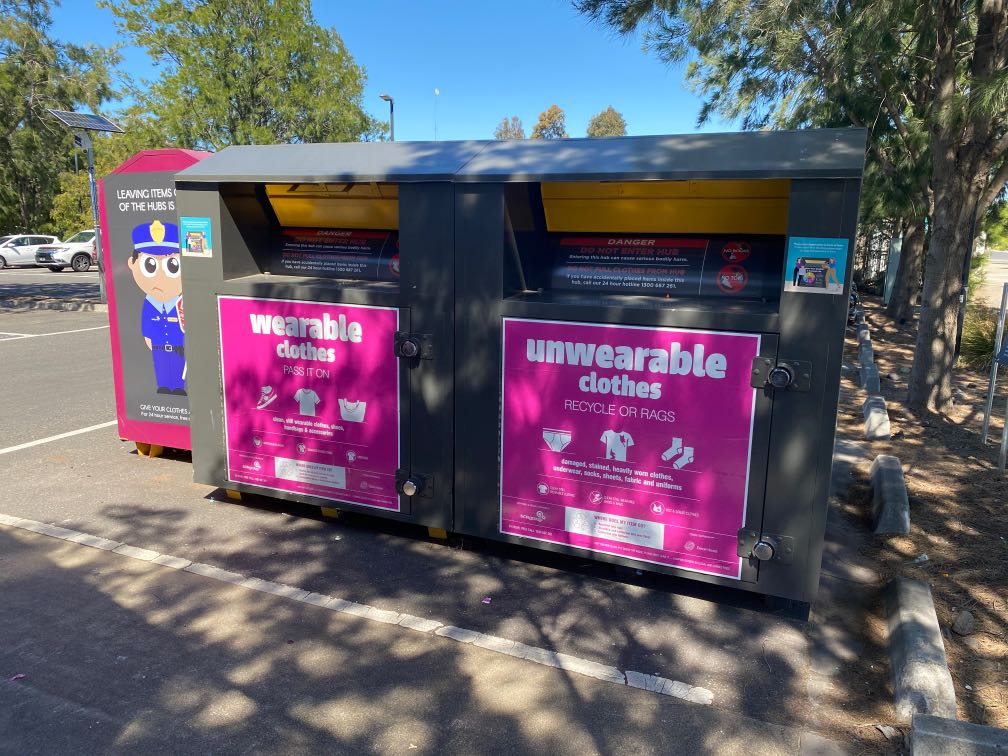
Wearable and Unwearable signage was placed on selected clothing hubs in Melbourne and Sydney as part of the Sort for Good pilot.
Sort for Good was funded through the Seamless Circular Clothing Textiles Fund to test a simple but critical shift: asking Australians to separate ‘wearable’ and ‘unwearable’ clothing at the point of donation and uncover what that means for reuse and recycling outcomes.
Led by SCRgroup and delivered with partners RMIT University, WRAP and Reground, the pilot focused on what happens before clothing enters the system because that’s where value is either protected or lost.
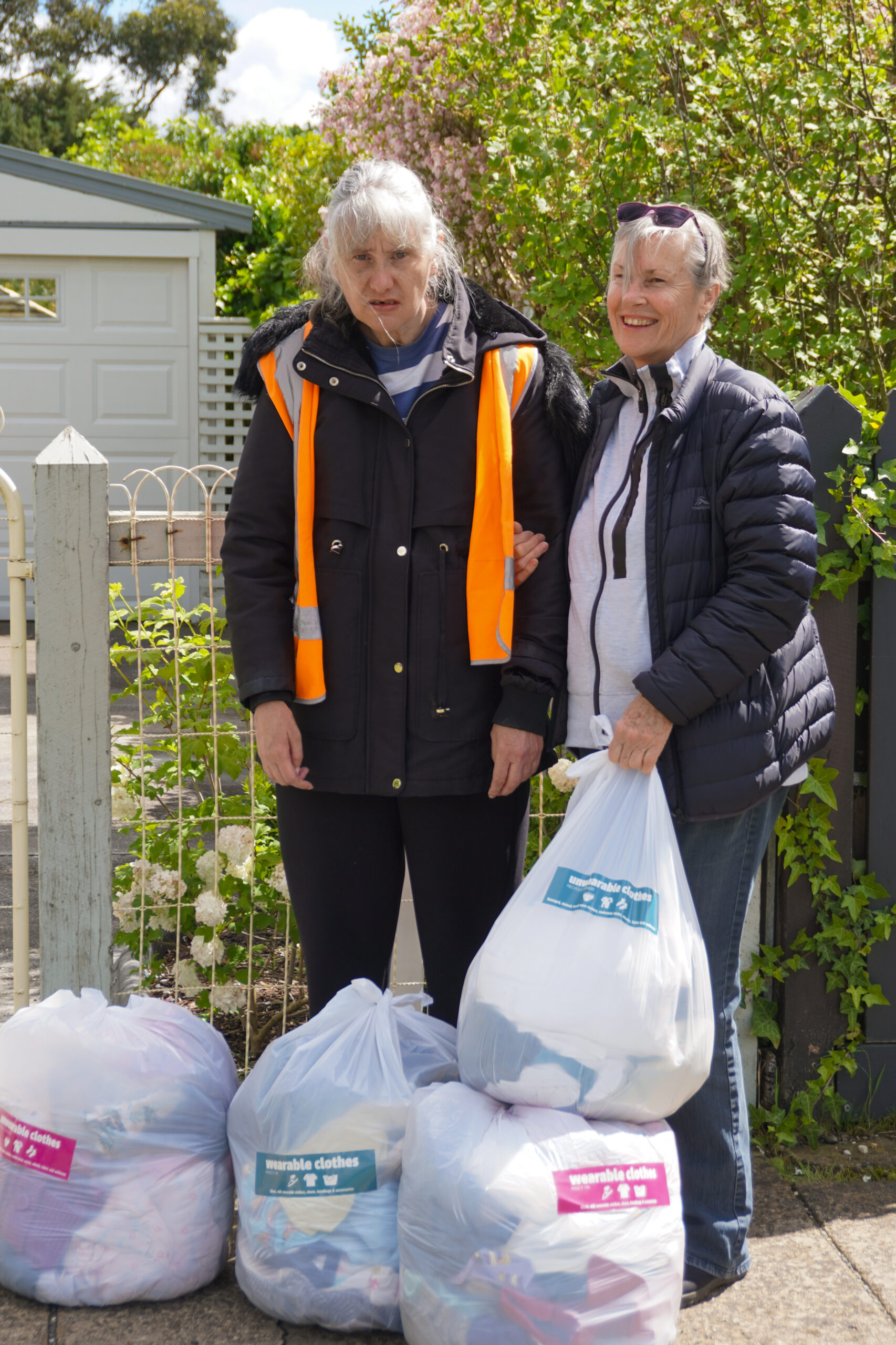
Over three months, the trial ran across three collection channels – public clothing hubs, excess charity stock and a kerbside collection across 2,500 households in the Macedon Ranges (Victoria). These reflect the most common ways people already donate clothing day to day.
The ask was straightforward: separate unwanted clothing into ‘wearable’ and ‘unwearable’.
People did it.
Across the pilot, 10 tonnes of clothing were collected including 6,805 kilograms wearable and 3,195 kilograms unwearable.
This is the first time in Australia that a coordinated, multi-channel trial has generated a dataset separating wearable and unwearable clothing at the point of donation.
That split matters because it shows how much is still suitable for reuse (the highest value outcome) and what needs a different pathway into recycling.
Wearable items need to be protected and prioritised for reuse.
Unwearable items need clear, viable pathways into recycling and recovery.
Through the pilot, unwearable items were analysed to better understand fibre composition, contamination and what recovery pathways are actually viable. This included testing upcycling and fibre-recovery options led by RMIT University, helping to connect what people donate with what can realistically be recycled or recovered at scale.
It reinforces a critical point – separating earlier doesn’t just improve sorting, it expands what becomes possible downstream.
When those streams are mixed, both outcomes are compromised.
Right now, the cost of managing this sits with charities and collection companies like SCRgroup – delivering a service that is largely free to the community — within a system that hasn’t been built to keep pace with the volume of unwanted clothing coming in today.
We also saw where the system starts to fall down.
In Melbourne, around 20 per cent of items were placed in the wrong stream. Not unexpected. It shows the limits of what we can expect people to get right without clearer prompts, better design and consistency across the system.
The pilot also reinforced what works.
Clear instructions reduce contamination. Colour-coding improves accuracy. When the system is easy to follow, people follow it.
We tested a single-colour approach, with teal and pink trialed separately. Early insights point to pink as the clearer, more intuitive cue for clothing and textiles.
If we want people to get this right at scale, the system needs to look and feel consistent across locations, operators and channels. This is already informing SCRgroup’s hub refresh, where clearer, more intuitive separation will be built into the design.
The gap in sorting capability was also hard to ignore.
Locally, 1.1 tonnes took 13 people two days to process. In contrast, significantly higher throughput can be achieved in established processing environments. That’s a very different operating reality.
If more sorting is expected to happen onshore, the capability must follow and right now, it doesn’t.
What this also reinforced is the role of existing, functioning reuse and processing pathways.
Australia does not currently have the infrastructure or workforce to manage this volume of material onshore. Without established pathways, a significant portion of what is collected would have nowhere to go.
Export is not a fallback. It is part of how the system currently functions — ensuring wearable items are rehomed and unwearable material is directed into viable end markets, rather than landfill.
“We can’t look at this in isolation,” said SCRgroup Managing Director Chris Todorovski.
“Australia doesn’t yet have the capacity to process everything it collects locally. Responsible pathways are part of making sure material is handled properly while that capability builds here onshore.”
There are some clear takeaways.
When instructions are simple, people follow them. When visual cues are clear, sorting improves. But it needs to be consistent across all channels and across the industry.
This isn’t about asking more of households. It’s about making it easier, and consistent, to get right.
For SCRgroup, the findings reinforce what we’re already seeing.
The volume of unwearable clothing is growing. It’s reducing the value of otherwise wearable donations when items are mixed. It’s increasing handling costs. And it’s exposing how limited the pathways are for material that can’t be reused.
Separating earlier helps. It protects value and creates clearer pathways for both reuse and recycling.
But it only works if the rest of the system is ready to respond.
Sort for Good didn’t try to solve everything. It focused on one part of the system and tested it properly.
What it showed is that people will do the right thing when it’s clear what that is.
The next step is making sure the system is ready to meet them there.

RMIT led an upcycling project from unwearable clothing collected during the pilot which appeared on the runway at Melbourne Fashion Week.
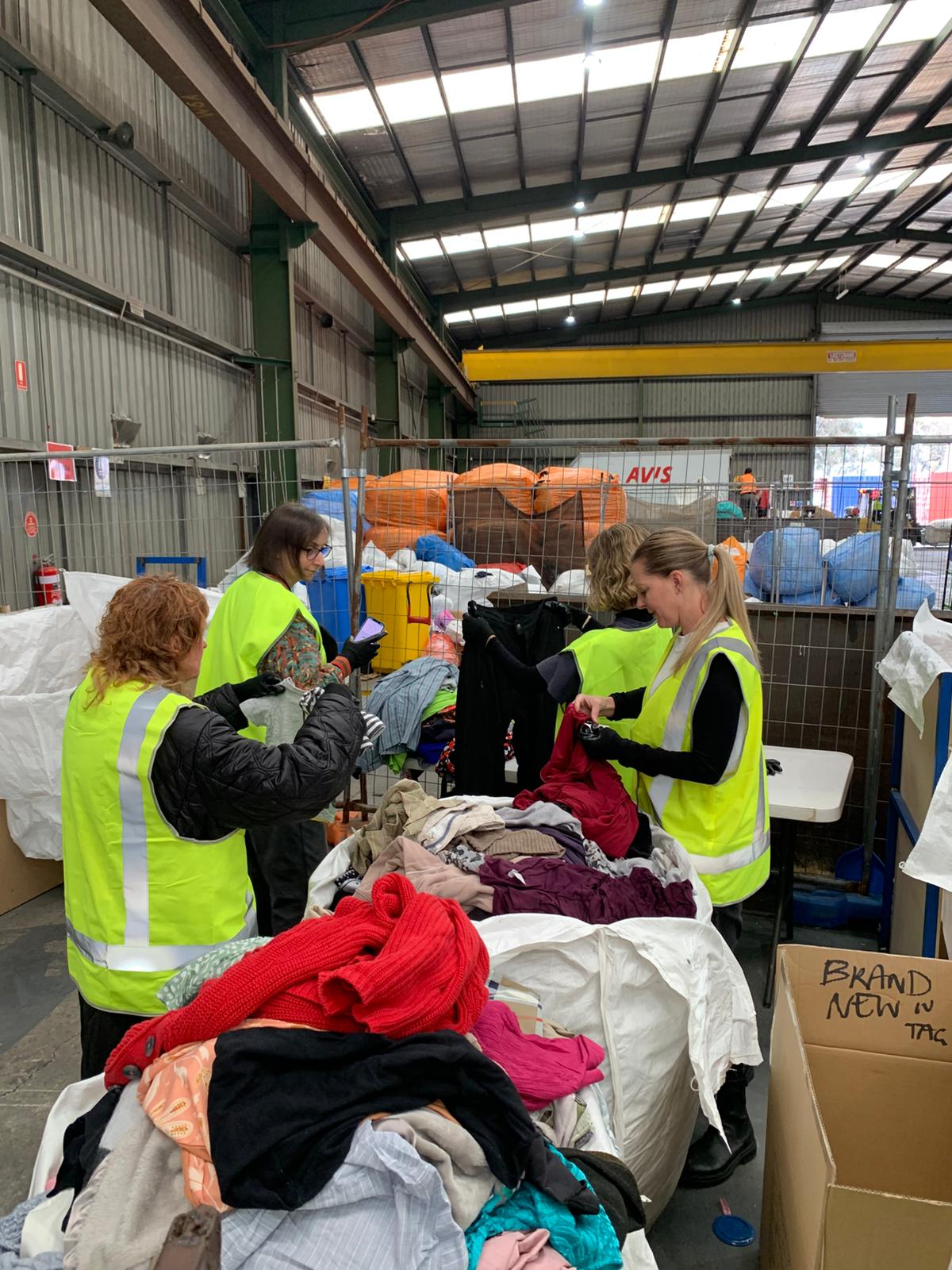
A team of 13 people from SCRgroup, RMIT and Reground manually sorted 1 tonne of clothing to understand how well people understood what went into the Wearable and Unwearable bins and bags.